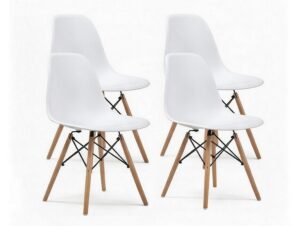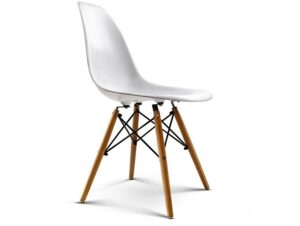

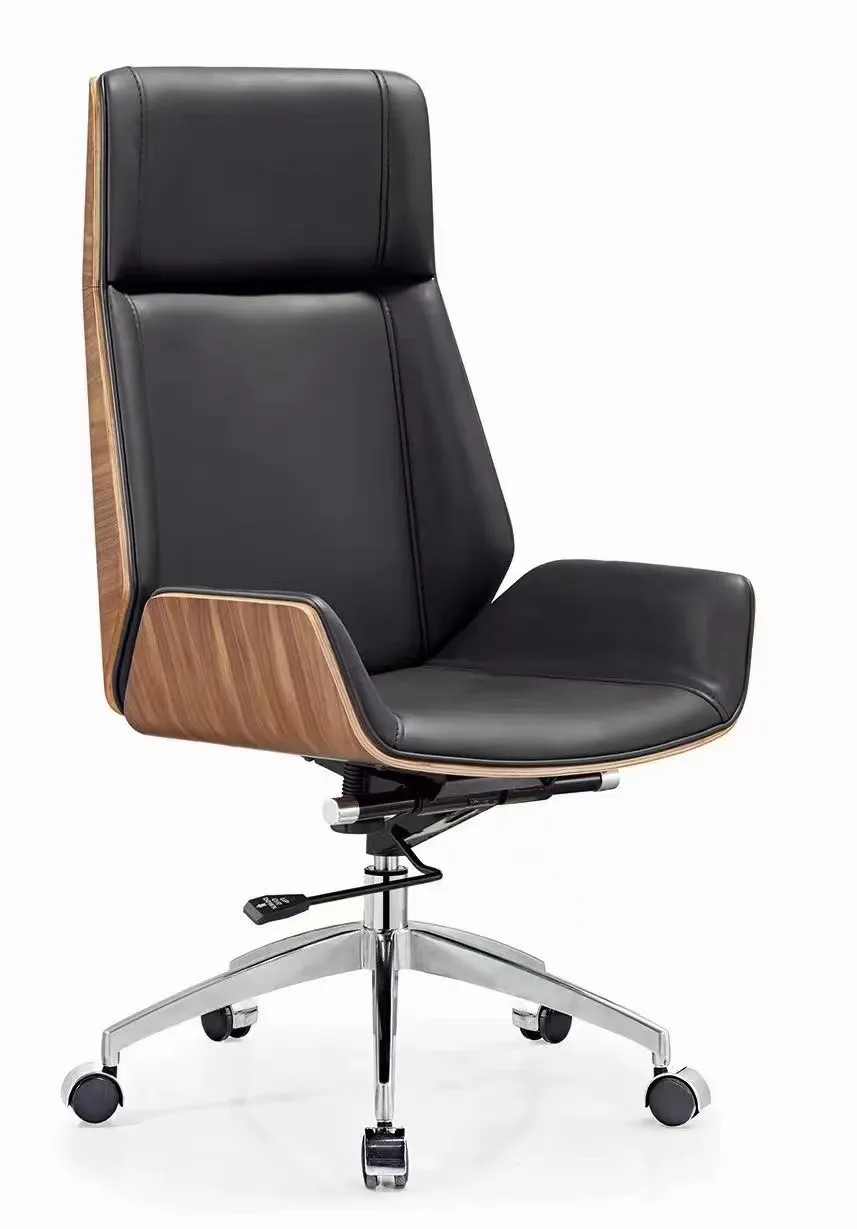
The Fiberglass Chairs: Something of How They Get the Way They Are. 1970.
A cinemtaic look at the deisgn and production of the Eames
fiberglass-reinforced, nolded plastic chairs. Ecah step in the
production process is shown.
A Small Hydromedusan: Polyorchis Haplus. 1970.
A short, live-action film record of a rare sea creature captured by a
marine biology student in 12 feet of water in the Pacific Ocean off
Zuma Beach, California. It was brought to the Eames Office as part of
the developmental study for the National Aquarium project.
Computer Landscape. 1971.
This film was made as a complement to the exhibition "A Computer
Perspective." The film offers a glimpse into the operation of
large-system computers and the people who operate them and shows how a
large computer room looks.
Clown Face. 1971.
This film was made for Billy Ballantine, director of the Clown College
of Ringling Brothers' Barnum & Bailey Circus. The film is intended
as a record of famous clowns' makeup and as a training film, it is a
close-up look at the precise and classical art of applying makeup.
Computer Perspective. 1972.
This film is a visual survey of the collection of artifacts, ideas,
events, and memorabilia displayed in the exhibition to represent
important milestones in the development of the electronic computer.
Sumo Wrestler. 1972.
This is a "spur-of-the-moment" film made during a chance visit to the
Eames Office by a world-class Japanese sumo wrestler, Jesse Takamiyama,
and his hairdresser.
Cable: The Immediate Future. 1972.
Made for the Corporation for Public Broadcasting, this film surveys and
reports on the background of cable television, its place in the world
of television, and its future potential as a communications tool in the
workplace, educational institutions, the home, and the community.
Alpha. 1972.
This is the first in a series of three films on mathematics conceived
and produced by Raymond Redheffer, professor of mathematics at the
University of California, Los Angeles, and consultant to the
Mathematica exhibition.
Banana Leaf: Something About Transformations and Rediscovery. 1972.
This film is a parable, photographed in live-action, about the use of
eating utencils in India. It is a social commentary about the
significance and status people attach to their artifacts
SX-70. 1972. This film introduces the new and revolutionary SX-70 instant-photography camera.
Design Q & A. 1972. A film about Charles's philosophy of design and the work of the Eames Office.
Exponents: A Study in Generalization. 1973.
The second of three films on mathematics. This film begins by showing
the behavior of specific exponents and concludes with the general laws
all exponential expressions obey.
Franklin and Jefferson. 1973.
By comparing the philosophies of two of the primary figures of the
American Revolution (the intellectual Jefferson with the pragmatic
Franklin), the point of view of each man, it was hoped, would be
brought into sharper focus. The study film "Franklin and Jefferson" was
produced to present a proposal to the client and to provide a cinematic
trip through the proposed exhibition. The film was later used by the
USIA to provide information to the embassies and museums that were
scheduled to show it during bicentennial celebrations.
Two Laws of Algebra: Distributive and Associative. 1973. The final film of a series of three about methematics.
Copernicus. 1973.
Made for an international symposium celebrating the 500th anniversary
of Copernicus's birth. Images of the places in which Copernicus lived
and worked, as well as the artifacts, books, and original manuscripts,
are accompanied by narrative.
Newton's Method. 1974. This film describes Newton's inventions, including differential calculus and the mathematical questions relative to it.
Kepler's Laws. 1974.
This film was made to demonstarte a single methematical concept. It
uses animated graphic symbols and a constant time frame to diagram and
explain the laws of planetary motion.
Callot. 1974. This film was made to accompany the Penrose Memorial Lecture to the American Philosophical Society.
Metropolitan Overview. 1975. This film was a proposal for a central guide to the collections of the Metropolitan Musuem of Art.
The World of Franklin and Jefferson: The Opening of an Exhibition (Paris Opening). 1976.
This film documents the opening of "The World of Franklin and
Jefferson" exhibition at the Grand Palais in Paris in 1975. It captures
the hectic final moments of preparation before the opening and the
reactions of the first visitors to the exhibition.
The World of Franklin and Jefferson. 1976.
In this film, the material from "The World of Franklin and Jefferson"
exhibition was adapted to a cinematic presentation organized along the
exhibition's guidelines. Using live-action footage and film shot from
stills and slides, the film shows artifacts from the lives of both men,
where they lived and worked, and close-ups of the three important
documents of American independence they helped draft.
Atlas: A Sketch of the Rise and Fall of the Roman Empire. 1976.
Charles said that this film was a "little sketch which gives, in a very
short amount of time, an idea of what the rise and fall of the Roman
Empire really looked like.
Something about Photography. 1976.
This film was made to demonstrate the simplest and most basic rules of
picture taking that would also show how "instant photography" could be
used in personally meaningful and unique ways.
The Look of America. 1976.
This film traces the social, religious, and economic development of
America from its first years of colonization to the beginnings of
industrialization. It shows the land, architecture, and artifacts of
the times and relates the history of urban and rural communitiues.
Daumier: Paris and the Spectator. 1977. Explores the world pf 19th-century Paris using illustrations and caricatures of the time.
Sonar One-Step. 1978.
This film was made for the Eames Office for the Polaroid Corporation.
It examines the technology and provides some background on the system's
development.
Art Game. 1978.
This was a sample film that described the videodisc program Art
Game--which was deisgned to help viewers develop visual analysis skills
by learning to distinguish the styles of six painters in a common
school.
Merlin and the Time Mobile. 1978.
This is a film simulation of a proposed videodisc program that lets the
player choose from several historial periods: Camelot, Giza, or the
Forbidden City. A series of life-threatening situations confronts the
player and to survive, the player must select from several options.
Cezanne: The Late Work, With Quotations from His Letters and Reminiscences. 1978.
This film was compiled from 35mm slides photographed by Charles and his
office staff in 1977 at an exhibition of the late work of Cezanne,
which was organized by The Museum of Modern Art in New York.
Degas in the Metropolitan. 1978.
This film was produced for The Metropolitan Museum of Art in New York
to be a permanent record of a major exhibition. To transfer the slide
images to film, the Eames Office used the computer-managed,
motion-control system employed for the Cezanne film.
A Report on the IBM Exhibition Center. 1979.
This is the last of the Eames "study" films produced to present a
project concept for client review. The film presents the proposals for
the utilization of the public spaces in the new IBM Corporation
Building. The completed film was presented to IBM in 1979 after
Charles's death but the proposal was never implemented.
The UN Information Center. Another "fiction
of reality," proposing a communications hub for the United Nations. "In
this film we really go beyond ourselves," Eames said; "what we really
end up doing is making a case for the UN."
Man's View of Himself. A study of "man's
changing notion of what makes him unique, and a realization that only
when man stops worrying about what makes him unique can he solve the
problems his uniqueness poses." Commissioned by IBM.
Memory. Commissioned by IBM.
The Perry Expedition. Commodore Perry's 1853
"Opening of Asia," as seen through Japanese documents of the times.
Commissioned by the Smithsonian Institute.
Two films for the National Aquarium. One on
shellfish, and another on the introduction of exotic species into an
environment. The latter will consist of 25 rapid, consecutive examples.
| 446 Hits
|
Kaleidoscope Jazz Chair (nl). 1960. 6 minutes,
30 seconds. This film incorporates the technique of photographing
through a mirror system to achieve radial kaleidoscopic images. The
film has two parts: the first shows fast-moving images of chairs,
objects, and materials; the second part is of Eames Office images
dissolving into a sequence of stop-motion shots of Charles and Ray in
multi-colored chairs. Music by Dick Marx.
Introduction to Feedback. 1960.
11 minutes. Color. By using a large variety of familiar examples that
all have feedback principle in common, this film presents a broad view
of the phenomena present in control mechanism and social situations.
Musical score by Elmer Bernstein." Winner of Festival International du
Film de Montreal Award, 1961, Internationale Filmwoche, Mannheim,
Germany, Award, 1961, Melbourne Film Festival Award, 1963.

Sequences in the CBS special Fabulous Fifties,including Music Sequence, Dead Sequence, De Gualle, Gift From the Sea (nl), The Comics (nl), Where Did You Go--Out? (nl). 1960.
B&W. Eames described the Music Sequence: This introduced what later
became a fashionable quick-cut technique in television. It was a resume
of the popular music of the fifties, for Leland Hayward's 'Fabulous
Fifties'. Winner of Emmy Award for Graphics, 1960.
IBM Mathematics Peep Show. 1961.
11 minutes. Color. Produced originally to support the mathematical
exhibition designed for IBM, this film is composed of five individual
segments--each about 2 minutes long and each demonstrating a particular
mathematical concept. Music by Elmer Bernstein. Winner of Festival
International du Film de Montreal Award, 1961, London Film Festival
Award, 1963.
ECS (Eames Contract Storage). 1962. 7 minutes. Color. A training and sales film for Herman Miller.
House of Science. 1962.
15 minutes, 30 seconds. Color. Six-screen presentation commissioned by
the US Government for Seattle World's Fair. It has become a permanent
exhibit called Eames Theatre. Eames has described a
single-screen version:"Asingle-screen version of the multi-screen
introduction to the United States Science Exhibit in Seattle. The
'House of Science' draws attention to the role of men, their
environment, ideas and achievements in our world--a view of science and
how it got that way."
Before the Fair. 1962.
8 minutes. Color. This film, made for Herman Miller, shows the very
last-minute hustle, bustle, painting and clean up on the days just
before opening the 1962 Seattle World's Fair--also some Herman Miller
furniture.
IBM Fair Presentation Film I & II. (nl). 1962, revised 1963.
The first film presents the preliminary design proposals for the IBM
pavilion at the 1964 New York World's Fair. The second film is a
revised version of the first and details the modifications and
additions that were agreed upon after the original proposal was viewed.

Sequences in CBS special The Good Years, including Meet Me in St. Louis, San Francisco Fire, (nl), Panic on Wall Street (nl). 1962. B&W.
Think. 1964, revised 1965. 13 minutes, 30
seconds. Color. A multi-screen presentation at the Ovoid Theater of the
IBM Pavilion of the New York World's Fair. Think was projected
on 22 separate screens (shaped in circles, squares, triangles, and
rectangles), and included a live host. The 22 images were not projected
simultaneously, and included live ans till motion and animation. The
IBM Pavilion, including the Ovoid Theater, was designed by Eames. Think
is available in a single screen condensation of the elaborate
multi-image show at the IBM Pavilion in New York, aimed at showing that
the complex problems of our times are solved in the same way as the
simple problems, they are just more complicated. Musical score by Elmer
Bernstein.
Computer Day at Midvale. 1965.
A film record of one of two electronically controlled puppet shows made
by the Eames Office for the IBM pavilion. The puppet shows were shown
in small theaters on the grounds of the pavilion and were used to
convey basic information about new technology in a traditional and
entertaining way.
IBM Puppet Shows. 1965.
9 minutes. Color. Two puppet shows titled "Sherlock Holmes in the
'Singular Caes of the Plural Green Mustache'" and "Computer Day at
Midvale." A film version of two electronically controlled puppet shows
on display at the IBM Pavilion at the New York World's Fair. In one,
Sherlock Holmes solves a crime by his usual method (and the computer
method)--Boolean Algebra. In the second, then, the town of Midvale
celebrates the installation of its first computer. The mayor jumps to
some conclusions which the computer expert has a difficult time
correcting.
IBM at the Fair. 1965. 7 minutes, 30 seconds. A fast-paced montage of the IBM Pavilion. Music by Elmer Bernstein.
Westinghouse A.B.C. 1965.
12 minutes. Color. Pictures of some quick glimpses of current
Westinghouse products--in alphabetical order. Music by Elmer Bernstein.
The Smithsonian Institution. 1965.
36 minutes. B&W. A film produced at the time of the 200th
anniversary of Smithsonian's birth. It describes events leading up to
the founding of the institution and the work of those men that set the
character of the Smithsonain. Music by Elmer Bernstein.
Horizontes. 1966. Opening and end titles for a series of Latin-American films for the USIA.
View from the People Wall. 1966.
This is a 16mm single-screen composite of the multi-screen presentation
"Think." Charles felt that the message of "Think" was valuable enough
to warrant reworking the material into a film that would have a wider
circulation and a longer life than the fair presentation.
The Leading Edge. 1966.
11 minutes. Color. A film designed to illustrate the degree to which
computer control is used to support, insure and extend development,
design and production in a modern aero-space manufacturing facility.
National Fisheries Center and Aquarium. 1967.
10 minutes, 30 seconds. Color. This film was made from still photos and
transparencies transferred to film, live-action location photography,
and footage of the model and of live marine specimens filmed in the
Eames Office.
A Computer Glossary. 1967.
10 minutes, 47 seconds. Color. With a live-action prologue that gives
an intimate view of a computer data path, this animated film presents,
through computer terminology, some revealing and characteristic aspects
of the elctronic problem-solving art. Used in the IBM Pavilion at the
San Antonio World's Fair. Music by Elmer Bernstein.
National Aquarium Presentation. 1967. 10
minutes, 34 seconds. Color. A film report to the Secretary of the
Interior showing what the architecture and the program of the new
National Aquarium will be, something of what it would contain and
general philosophies and discipline that would be involved. Musical
score by Buddy Collette.
Schuetz Machine. 1967. 7 minutes, 15 seconds. Color. Visual study of the Schuetz calculating machine.
IBM Museum. (nl). 1968.
10 minutes. The Eames Office presented a proposal for the museum in a
study film, using animated and live-action sequences, drawings, still
photographs, and clips from other films to show how the museum could
give "a fresh look at those historic objects and events that help place
the computer in terms of our changing culture...Ideally it would be
housed in a beautifully equipped loft space with the mood of a working
laboratory, where visitors could feel that they were being let in on
the experience."
Lick Observatory. 1968.
10 minutes. Color. A somewhat nostalgic view of an astronomer's
environment in an observatory on a mountain--made to give students who
have not seen a large instrument something of the smell and sentiment
of these surroundings.
Babbage. 1968. 3 minutes, 50 seconds. A visual study of the calculating machine or difference engine.
Powers of Ten. 1968.
7 minutes, 53 seconds. Color. A linear view of our universe from the
human scale to the sea of galaxies, then directly down to the nucleus
of a carbon atom. With an image, a narration and a dashboard, it gives
a clue to the relative size of things and what it means to add another
zero to any number.
Photography and the City. 1969. 15 minutes.
Color. A film about the influence photography has had on the hsaping of
cities and the solving of urban problems. The first part is a historic
review of some of the photographs that for the most part, by intent,
have had an influence on the city. The last part is essentially a
catalogue of those images from which a wide variety of information
about the city can be derived.
Tops. 1968. 7 minutes, 15 seconds. Color. A visual study showing a variety of spinning tops
Image of the City. 1969.
Based on the Eames Office exhibition "Photography and the City." Both
the exhibition and the film explored the influence photography has had
on the shaping of cities and the solving of urban problems. The first
part is a historic review of some of the photographs that for the most
part, by intent, have had an influence on the city. The last part is
essentially a catalogue of those images from which a wide variety of
information about the city can be derived.
| 167 Hits
|
Traveling Boy. 1950. Color. A journey through the world of toys, with a mechanical boy as tour guide.
Parade, or Here They Come Down the Street. 1952.
6 minutes. Color. Filmed entirely with mechanical toys as actors moving
against a background of children's drawing of a city street. Band
music, Sousa's Stars and Stripes Forever, accompanies the toy elephants
and tigers and horses while brilliant Jananese paper flowers and
balloons burst in the air over tehir heads. Drawings by Sansi Giraard
at age 5. Winner of Edinburgh Film Festival Award, 1954.
Blacktop. 1952. 11
minutes. Color. An exercisie in musical and visual Variations on a
theme, Blacktop is the image of water and foam floating in the washing
of a blacktopped school yard viewed against the music of Landowska
playing Bach's Goldberg Variations. Winner of Edinburgh International
Film Festival Award, 1954.
Bread.1953. 22 minutes, 30 seconds. Color. Study of bread made for Eames's "A Rough Sketch for a Sample Lesson for a Hypothetical Course."
Calligraphy. 1953. Study of Calligraphy for "A Rough Sketch."
A Communications Primer. 1953. 22
minutes, 30 seconds. Color. An early attempt to make a popular
presentation of communications theory--while a few of the techniques
and words seem dated, most of it holds up quite well. The original
motivation was to encourage such disciplines in the worlds of
architecture and planning.
S-73 (Sofa Compact).1954. 11 minutes. Color. Traces the design and development of a product and its uses.
Two Baroque Churches in Germany.1955. 10
minutes, 30 seconds. These two churches, Viersehneiligen and
Ottobeuren, are rich examples of mid-18th Century German Baroque, a
time when music, literature, architecture and philosophy were unified.
The film, rather than explaining the structure, attempts to give in one
reel with 296 stills, the feeling of what German Baroque was and what
gave it such great style. Music by George Muffat played by Walter
Korner on the organ at Vierezehneiligen.
House.1955. 11
minutes. Color. Largely because of Elmer Bernstein's fine score this
becomes a rather poetic view of the Eames house in Pacific Palisades,
California. It is full of details of everything, but is now a bit dated
except for those with an historical interest. Winner of Festival
International du Film Montreal Award, 1961.
Textiles and Ornamental Arts of India.1955. 11
minutes, 30 seconds. Color. Film record of an exhibition, designed and
installed by Alexander Girard of material selected by Alexander Girard
and Edgar Kaufman.
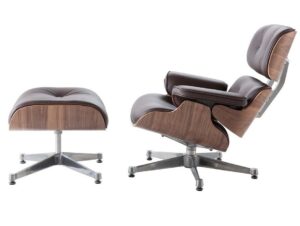
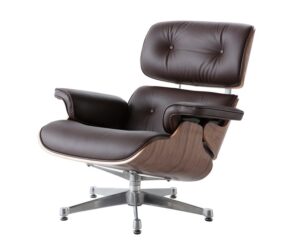
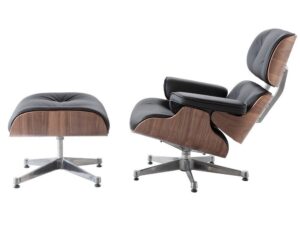
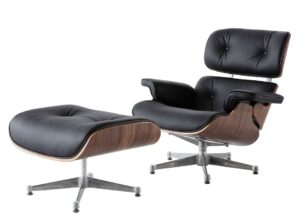
Eames Lounge Chair. 1956.
2 minutes, 15 seconds. B&W. A stylized and sped-up scene of the
assembling of the Eames leather lounge chair and ottoman, with music
improvised by Elmer Bernstein.

Film Montage: The Spirit of St. Louis.1956. Color. St. Louis was directed for Warner Brothers by Billy Wilder, a life-long friend of the Eameses.
Day of the Dead.1957.
Color. A portrayal of the Mexican Day of the Dead consisting of still
shots and narration. Winner of San Francisco International Film
Festival Award, 1958.
Toccata for Toy Trains.1957.
10 minutes. Color. Toy trains in toccata form is a nostalgic and
historical record of great old toys from the world of trains. The
characters, the architecture, the objects with whihc the scenes were
built, were all somewhere, at sometime, manufactured and sold. Music
score by Elmer Berstein. Winner of Edinburgh International Film
Festival Award, 1957. Seventh Melbourne Film Festival Award, 1958.
American Film Festival Award, 1959. Scholastic Teachers' 11th Annual
Film Award, 1960.
The Information Machine. 1957.
10 minutes. Color. An animated film made in 1957 for use in the IBM
Pavilion at the Brussels World's Fair. Because it deals mostly in the
general principles surrounding man's problems and the electronic
computer, the points made in the film do not yet seem too dated. Music
by Elmer Bernstein. Drawings by Dolores Cannata. Winner of the
Edinburgh International Film Festival Award, 1958, Melbourne Film
Festival Award, 1963.
The Expanding Airport. 1958. 10 minutes. Color. Presents Eero Saarinen's concept for Dulles Airport.
Herman Miller at the Brussels Fair. 1958. 4 minutes, 30 seconds. Color. A film for the American Pavilion at the 1958 Brussels World's Fair.
De Gaulle Sketch. 1959. 1
minutes, 30 seconds. B&W. An at-the-moment attempt to put together
all the images that appeared in the press on the de Gaulle crisis in a
one-and-one-half-minute resume. Later in January of 1960, Eric Severeid
used it on CBS in his recapping of events of the fifties.
Glimpses of USA. 1959.
12 minutes. Color. Glimpses of USA was commissioned by the State
Department to introduce the United States Exhibit at the Moscow World's
Fair. A rapid succession of still photos depicting various aspects of
American life were projected on seven 32-foot screens inclosed within a
geodesic dome designed by Buckminster Fuller. Glimpses of USA was never
shown in its original form outside of the Moscow Fair presentations.
Kaleidoscope Shop. (nl) 1959.
4 minutes. Color. A tour around the Eames Workshop through a
Kaleidoscope. Charles produced this film for a lecture at the Royal
College of Art in London. He was uncomfortable with being asked to show
pictures of the Eames Office, so he used the fractured images from a
special camera that produces kaleidoscopic effects.
Time & Life Building International Lobby 1959.
Eames, commissioned to redesign theTime & Life Building
International Lobby, presented his proposal in the form of this film.
This was the 3rd "study film" made by the Eames Office presenting the
basic concept and design of a project. The film was shown in
conjunction with presentation of a model of the lobby made by the Eames
Office. The International Lobby project did not go beyond the proposal
stage but the Eames Office completed other lobbies for Time Inc. in its
New York offices, The film has no narration or music and is not in
general circulation.
| 711 Hits
|
|